
The lay of the land
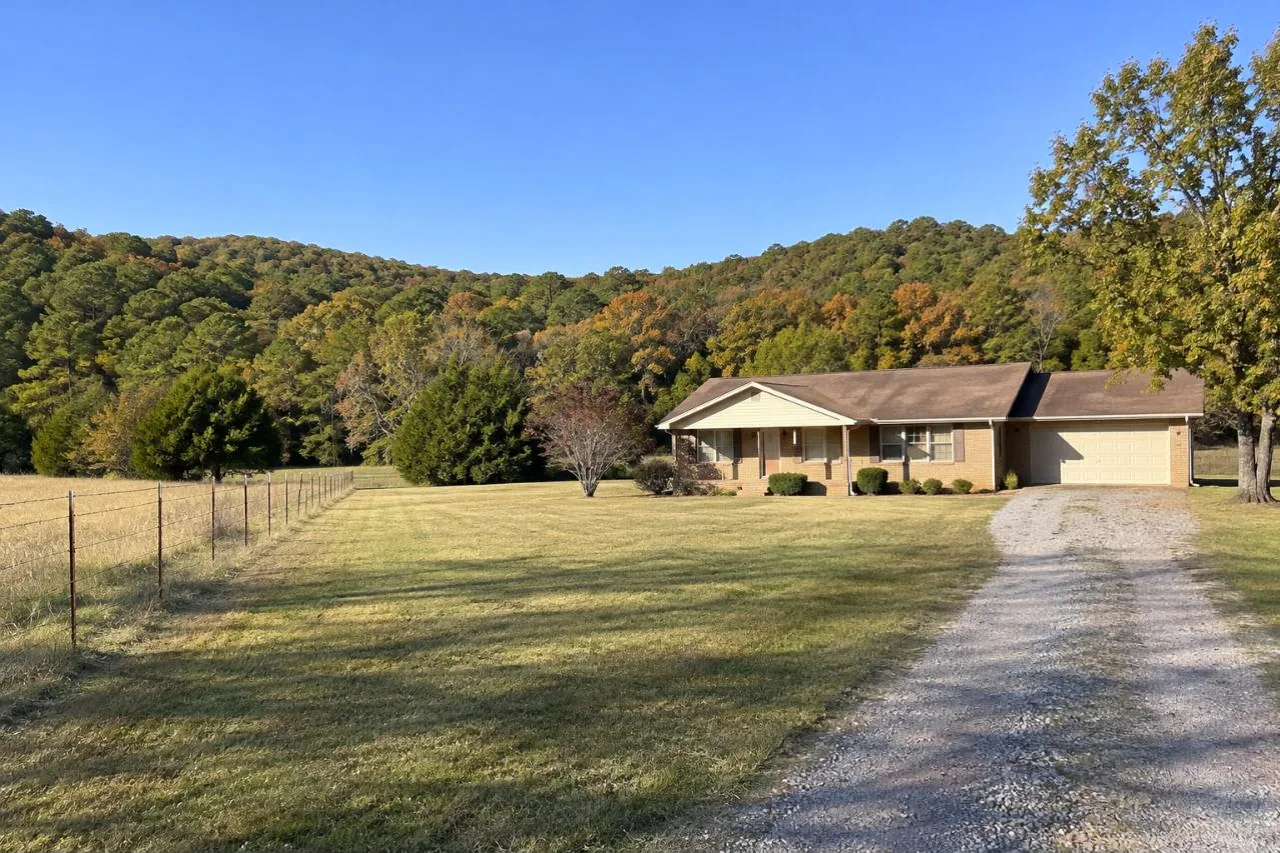
Faulkner County sits in central Arkansas "at the intersection of the Ozarks and Arkansas River Valley," as its Wikipedia entry puts it. The Census Bureau counts 647 square miles of land (2020). Conway sits at about 331 feet above sea level and Vilonia at about 312, with more rolling, wooded ground to the north toward Greenbrier, Guy and Damascus.
The county keeps growing into that woodland. The Census Bureau put Faulkner County at 133,979 people as of July 1, 2025, up from 123,498 in the 2020 count, and Conway alone at 72,328 (both checked Nov 10, 2026). Pulse of Conway, citing the same data in May 2026, called it the fourth fastest-growing county in Arkansas. Housing units rose from 55,394 to 56,264 between 2024 and 2025, Talk Business & Politics reported (checked Nov 10, 2026).
Common yard trees and how they fail
| Tree | Mature size (NC State) | Known weakness | UF wind rating |
|---|---|---|---|
| Water oak | 50–80 ft tall, 50–70 ft wide | Limbs "notoriously weak"; "may only live 30 to 50 years" | Lowest |
| Willow oak | 40–75 ft tall, 25–50 ft wide | "Susceptible to wind damage" | Medium-low |
| Post oak | 35–50 ft tall and wide | Dying in the 2026 drought; post oak decline | Not rated |
| Southern red oak | 60–100 ft tall, 50–60 ft wide | "Susceptible to wind damage" | Lowest |
| Loblolly pine | 60–90 ft tall, 20–40 ft wide | Bark beetles after drought; wind | Pines in general: "very sensitive to wind damage" |
| Shortleaf pine | 80–100 ft tall, 20–40 ft wide | Bark beetles after drought; wind | Pines in general: "very sensitive to wind damage" |
| Sweetgum | 60–100 ft tall, 40–50 ft wide | Shallow root system; gumball litter | Medium-high |
| Pecan | 70–100 ft tall, 40–75 ft wide | Brittle branches "prone to breakage, especially in wind" | Lowest |
| Bradford pear | 30–50 ft tall, 20–35 ft wide | Splits with age and in storms | Lowest |
| Eastern redcedar | 30–40 ft tall, 10–20 ft wide | High flammability; bagworms; cedar-apple rust | Not rated |
Sizes and notes from NC State Extension's Plant Toolbox; wind ratings from a University of Florida study of trees after ten hurricanes (FR173), which ranks live oak highest of all (both checked Nov 10, 2026).
Oaks
Oaks are the trees most at risk right now. USDA's soil descriptions for the region list post, red and white oaks with hickory and shortleaf pine as the native woodland on its upland soils. The 2025–2026 drought hit post oaks especially hard: in June 2026, a U of A forestry educator said "seemingly healthy trees will just randomly die overnight." Drought-stressed oaks fall to hypoxylon canker, a fungus with no cure, and the U.S. Forest Service reported post oak decline in northeast Arkansas starting in summer 2025.
Water oak is the weak link among planted oaks. NC State says it grows fast, that its wood is weaker than most oaks, and that it's at risk of breakage in wind and in snow or ice. The full story is in the dying oak guide.
Pines
Loblolly, which NC State says has "the most rapid growth rate of all pines," and shortleaf are the pines of the county's woods and yards. Both are "susceptible to wind damage," per NC State, and a UF publication notes that "pines have been observed to be very sensitive to wind damage." Their bigger threat after a dry year is bark beetles. The state Forestry Division says Ips engraver beetles periodically kill pines, typically after drought, while in Arkansas the southern pine beetle "has not been a problem since the mid-1990s" (checked Nov 10, 2026). See dead or leaning trees for the signs.
Pecans
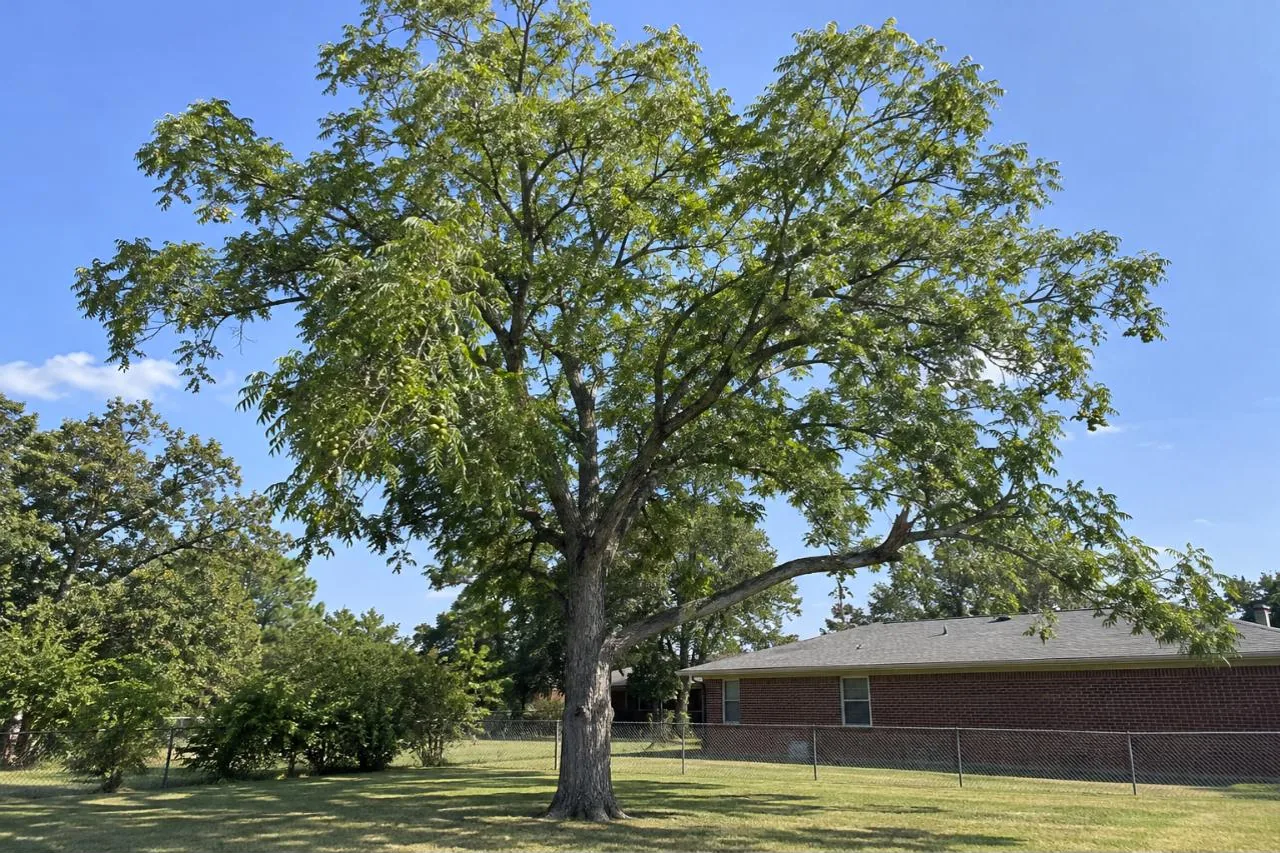
A backyard pecan can outgrow everything around it. NC State lists mature pecans at 70 to 100 feet tall, sometimes 130, with a 40- to 75-foot spread and trunks up to 6 feet thick, held by a deep taproot. The weakness is up top: NC State says pecan has brittle branches "prone to breakage, especially in wind," and the UF study puts it in the lowest wind group and on its list of trees to inspect when over-mature. The U of A's plant health clinic also lists pecan among the hosts of hypoxylon canker. A big pecan limb over a roof is worth a look before storm season.
Sweetgum, Bradford pear, redcedar and the rest
- Sweetgum. NC State notes a shallow root system and gumballs that drop from December to April. It rated medium-high in the UF wind study, ahead of the oaks and the pecan in the table above.
- Bradford pear. The U of A describes "many limbs originating from a central location" and "a poor crown structure" that is "prone to breakup," with a life expectancy of about 12 to 15 years. It also crowds out native species. The City of Conway ran bounties for removing them in 2025 and 2026.
- Eastern redcedar. NC State says it tolerates everything from swampy to dry, rocky soil and has high flammability, which matters next to a house in a dry year.
- Ash. Emerald ash borer is confirmed in 44 of Arkansas's 75 counties, including Pulaski next door, per the Forest Service's 2025 report (checked Nov 10, 2026).
- Sycamore and elm. Both are hypoxylon canker hosts, per the U of A.
- Sassafras. Threatened by laurel wilt, which the Forestry Division says is moving through Arkansas.
What Conway is planting
For its March 21, 2026 giveaway, the Conway Tree Board lined up Shumard oak, cherrybark oak, wild plum, river birch, elderberry, red mulberry, black walnut, Kentucky coffeetree, black chokeberry and persimmon, according to its March 2026 minutes, which noted that substitutions might still occur. River birch rated medium-high in the UF wind study. For a Bradford pear's spot, the U of A suggests serviceberry, dogwood or redbud, not another ornamental pear.
Soils: rock, red clay and wet flats
Which soil series lie under any given Conway lot wasn't something this site could confirm, but USDA's official descriptions for the Arkansas Valley and Ozark foothills show the regional pattern:
| Series | Where | Depth to rock or pan | What you'd dig up |
|---|---|---|---|
| Mountainburg | Hill backslopes | Sandstone at 12–20 in. | Strong-brown, very cobbly sandy clay loam |
| Linker | Hill and ridge tops | Sandstone at 20–40 in. | Brown sandy loam over yellowish-red loam |
| Enders | Ridges over shale | Shale at 40 in. or more | Yellowish-red to red clay, mottled lower down |
| Spadra | Stream terraces | Deep | Dark-brown loam over reddish-brown loam |
| Nella | Hillsides and footslopes | Bedrock 6 ft or more | Yellowish-red to red cobbly clay loam |
| Taft | Upland flats and terraces | Fragipan at 20–36 in. | Silt loam with gray mottles |
| Guthrie | Level flats and depressions | Fragipan from about 32 in. | Gray silt loam; can pond for weeks |
USDA official soil series descriptions (checked Nov 10, 2026). On ridges and hillsides, roots run into sandstone or shale within a few feet; on the flats, a dense pan and standing water in winter limit them. The U of A's Jon Barry notes that about 80 percent of a tree's roots are in the top 18 inches anyway, which is why digging, fill and heavy equipment over the roots do so much harm.
Storms that tested these trees
- December 2000. Two ice storms; more than 500,000 Arkansas customers lost power, and ice "stressed trees and tree limbs to the point where they fell on houses" (NWS Little Rock).
- April 25, 2011. An EF2 tornado more than 51 miles long killed four people on Vilonia's southwest side (NWS Little Rock).
- December 25, 2012. 11 inches of snow at Mayflower, ice up to a quarter inch on trees and lines (NWS Little Rock).
- April 27, 2014. The Mayflower–Vilonia EF4, with a path nearly three-quarters of a mile wide and 41.3 miles long, killed 12 people in Faulkner County (NWS Little Rock; Encyclopedia of Arkansas).
- June 6, 2014. "Numerous trees were blown down in Conway and around Faulkner County" (NWS Storm Data).
- February 2021. About 11 inches of snow near Vilonia and 8 to 10 inches in Greenbrier (NWS Little Rock).
- June 25, 2023. Numerous trees down across Conway; large trees and power poles down near Vilonia (NWS Storm Data).
- January 2026. A sleet storm that collapsed roofs and docks in the region; Faulkner was among 54 counties in FEMA's physical loss notice (NWS Little Rock; KEDM, March 23, 2026).
More on what to do when a storm brings a tree down: storm and emergency removal.
Insects and diseases to watch
- Drought stress underlies most of it. The U of A said in August 2026 that Arkansas had more than 1,000 wildfires covering over 27,000 acres that year, and that drought stress on trees had "really started to show."
- Hypoxylon canker on drought-stressed oaks, with no cure.
- Ips engraver beetles on drought-stressed pines.
- Post oak decline, reported in Arkansas since summer 2025.
- Spongy moth. One detection in Arkansas's 2025 trapping, with further federal testing planned in Van Buren County, which borders Faulkner (USFS 2025).
- Variable oakleaf caterpillar stripped oaks in Pulaski, Perry, Garland, Montgomery and Saline counties in late summer 2023, per the state's forest health report.
Questions about local trees
Which tree in my yard should I worry about most?
Start with any large water oak, southern red oak, pecan or Bradford pear that could reach the house; all four are in the UF study's lowest wind group. Then any oak losing bark or any pine turning red.
What should I plant instead of a Bradford pear?
The U of A suggests serviceberry, dogwood or redbud, and warns against replacing it with another ornamental pear.
Why do pines die after a drought even when it rains again?
U of A forester Jon Barry wrote that drought-damaged trees "will continue to be susceptible to bark beetles for a few years."
Are redcedars a fire risk near the house?
NC State lists eastern redcedar as highly flammable. In a dry year with burn bans in place, that's worth keeping in mind when it grows against a wall or under eaves.
Tree requests sent from this site go to one independent contractor who works across Faulkner County. The site itself doesn't do tree work.
Sources
- Wikipedia, Faulkner County, Arkansas, Conway and Vilonia.
- U.S. Census Bureau via FRED, Faulkner County population; Census QuickFacts; Talk Business & Politics, May 14, 2026; Pulse of Conway, May 13, 2026. Checked Nov 10, 2026.
- NC State Extension Plant Toolbox: water oak, willow oak, post oak, southern red oak, loblolly pine, shortleaf pine, sweetgum, pecan, Callery pear, eastern redcedar. University of Florida IFAS, FR173. Checked Nov 10, 2026.
- USDA official soil series descriptions: Mountainburg, Linker, Enders, Spadra, Nella, Taft, Guthrie. Checked Nov 10, 2026.
- U of A Division of Agriculture: June 29, 2026 and Aug. 20, 2026 news; Bradford pear; FSA7557; Plant Health Clinic, 2018. Jon Barry, Receding Drought Leaves Deadly Touch.
- Arkansas Department of Agriculture, Forest Health and Forest Health Highlights 2023; USDA Forest Service, Arkansas Forest Health Highlights 2025. Checked Nov 10, 2026.
- City of Conway, Tree Board minutes, March 2026 and Bradford Pear Bounty. Checked Nov 10, 2026.
- NWS Little Rock: December 2000, April 2011 and 2014 tornadoes, December 2012, June 2014 Storm Data, February 2021, June 2023 Storm Data, January 2026. Encyclopedia of Arkansas, Tornado Outbreak of April 27, 2014. KEDM, March 23, 2026.